 Skip to content

A mother in Fort Worth may get the call with almost no useful information: her son has been arrested, he may be at the Tarrant County Corrections Center, and nobody can say when he'll come home. The first instinct is often to drive to the jail with money. That can waste time if booking or magistration isn't complete.
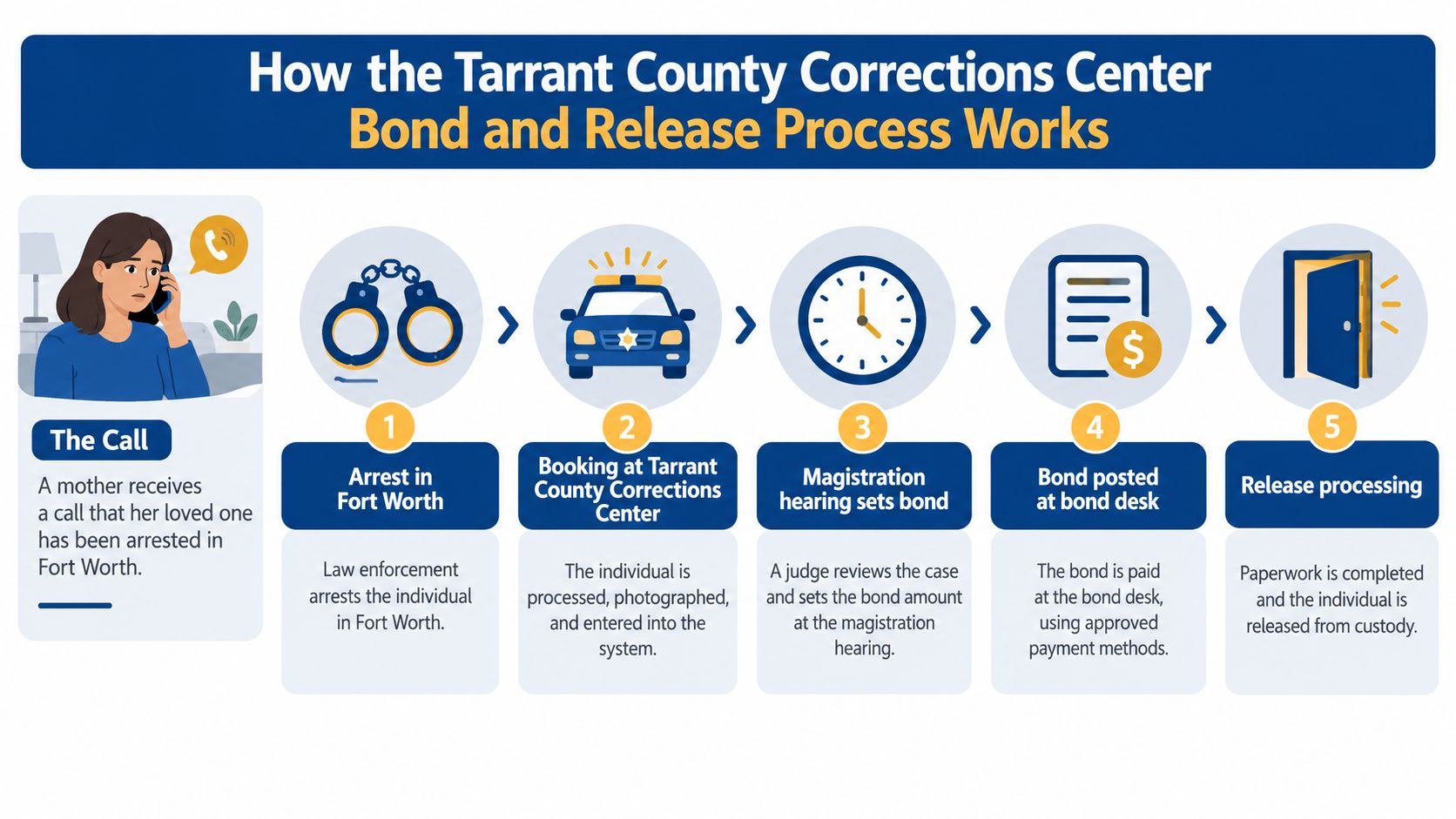
The Tarrant County Corrections Center bond and release process happens in stages. Arrest and transport come first, followed by booking, identification, magistration, bond posting, verification, and release processing. A bond can be posted at the county's Bond Desk 24 hours a day, but payment alone doesn't guarantee an immediate release. The jail still must complete its internal review and check for other holds.
The central operational point is the Tarrant County Corrections Center at 100 N. Lamar in Fort Worth. The county directs families to call the inmate information line at 817-884-3000 to confirm whether bond has been set and the amount. The county's official bond information page also explains the difference between paying the full bond yourself and using a licensed, bonded bail bond company.
Table of Contents
- How the Tarrant County Corrections Center Bond and Release Process Works
- Types of Bonds Available in Tarrant County
- How to Post Bond and Start the Release
- Realistic Timelines and Common Delays
- Mistakes That Can Derail a Release
- What Comes Next After Release and When to Call a Lawyer
How the Tarrant County Corrections Center Bond and Release Process Works
A family member may learn that someone was arrested in Fort Worth before the person appears in the county jail system. The arresting agency may still be transporting them, booking may be incomplete, or another holding location may be handling the first part of the intake. Start by confirming the person's location. Driving to the Bond Desk before the county record is ready usually does not speed up release.
The Tarrant County Corrections Center bond and release process happens in stages. Each stage supplies information needed for the next one, and an agency hold can interrupt the process after bond has been posted.
The process moves in a fixed sequence
Arrest and transport
The arresting agency takes the person into custody. Depending on the agency and the circumstances, the person may go directly to the county facility or pass through another holding location first. Confirm which agency has custody before asking about payment or release.Booking and identification
Jail staff record identifying information, take photographs and fingerprints, enter the alleged charges, and complete intake procedures. An incomplete booking record can keep the online search from showing reliable information. It can also mean the Bond Desk has no bond available to accept.Magistration
A magistrate reviews the case during the early custody stage. The magistrate addresses probable cause and sets, denies, or otherwise determines release conditions under the law. Tarrant County says the review may consider ability to pay, the severity of the charge, pretrial risk, and community safety. The county's Central Magistration information explains the local court process.Bond posting
After a bond is set and entered into the jail's records, the person can post it or arrange a surety bond. The Bond Desk at 100 N. Lamar in Fort Worth accepts bonds around the clock. A person paying directly must provide the full amount. A licensed and bonded Tarrant County bail bond company may arrange a surety bond instead.Release processing
Posting bond starts another review. Jail staff verify the paperwork, check for holds from other agencies, and update the custody record. If no hold remains, the person proceeds through release processing. If another agency has placed a hold, the person may be transferred rather than released from the county facility.
Why the first few hours can be confusing
The stages are sequential, so a correct payment may still be followed by a wait. The bond may not have been set, booking may remain incomplete, or jail staff may be verifying information from another agency. County guidance describes the booking, magistration, and release sequence as taking several hours, not minutes.
Texas law also permits a personal bond in some circumstances. Under Texas Code of Criminal Procedure article 17.03, a magistrate may release a defendant on a personal bond without sureties or other security, subject to statutory exceptions. This option depends on the magistrate's decision and does not apply to every person.
For a closer explanation of the court stage, see what happens at a Tarrant County magistrate hearing after arrest. Confirm custody, confirm whether bond has been set, and ask whether any agency hold remains before treating the delay as a payment problem.
Types of Bonds Available in Tarrant County
A worried family member should first identify the bond the magistrate ordered. The payment choice comes after that decision. A defendant cannot demand a personal bond because it costs less, and paying cash will not clear an agency hold or release someone whose bond has not been set.
Comparing the main options
| Bond Type | How It Works | Typical Cost | Refundable? | Best Fit |
|---|---|---|---|---|
| Cash bond | The person posting bond pays the full amount directly through the county's process | The full bond amount must be available | Potentially, subject to the applicable case and court requirements | Someone who can pay the full amount and wants to avoid a bondsman |
| Surety bond | A licensed and bonded bail bond company arranges the bond on the defendant's behalf | A fee and any agreement required by the bond company | The fee is generally not treated like a cash deposit | Families who cannot or do not want to provide the full amount |
| Personal bond or PR bond | The defendant is released on a written promise to appear, without paying money or providing surety when approved | No money is posted as the security itself, although conditions may apply | Not applicable in the same way as a cash bond | A person the magistrate finds eligible under the circumstances |
| Specialty arrangements | Certain cases may involve another legally recognized arrangement or transfer process | Depends on the specific order and authority involved | Depends on the arrangement | Situations that don't fit the ordinary cash, surety, or personal-bond path |
A cash bond requires the full amount and follows the county's payment procedures. Tarrant County states that a person paying the bond directly must pay the full amount. Before anyone drives to the Bond Desk, ask which identification, documentation, and payment method the county will accept. A correct payment can still be followed by a wait while the jail verifies the transaction, updates the booking record, or checks for an agency hold.
A surety bond places the bond arrangement with a licensed and bonded bail bond company. Read the contract before signing. Ask specifically about fees, collateral, payment obligations, and what happens if the defendant misses a court setting. The bondsman can explain the company's requirements, but cannot change the magistrate's order or remove an independent hold from another agency.
A personal bond, also called a PR bond, is available under Texas law in qualifying circumstances, but approval rests with the magistrate. The order may include conditions, and the person still must appear as directed. Figures reported in a Tarrant County pretrial analysis state that only 6% of defendants received personal bond and 60% were released on cash or surety bond without county oversight. Treat a PR bond as an option to ask about, not an outcome to expect.
Specialty arrangements need careful review. A transfer, another legally recognized release arrangement, or an agency-specific process may involve different instructions and timing. Do not sign paperwork you have not read, and do not assume a bondsman's approval means the county has cleared the person for release.
Practical rule: Ask which bond the magistrate ordered, whether the bond desk has received the paperwork, and whether any agency hold remains. That information determines the real release path, not the family's preferred payment method.
How to Post Bond and Start the Release
Start with information, not a trip to the jail. Confirm that the person is in custody, identify the facility, and determine whether a bond has been set. The county's inmate information guidance directs families to verify custody and bond information before beginning the release process.
Confirm the record before paying
Have the person's full legal name, date of birth, and booking information available. Call 817-884-3000 to ask whether bond has been set and in what amount. You can also use the county's inmate information tools, but records can change while booking and magistration are still underway.
If no bond appears, ask whether the person is still awaiting magistration or whether the jail is updating its records. Don't guess at the amount. A payment for the wrong person or wrong amount can create a new delay rather than solve the original problem.
Choose the payment path
If you're paying the bond yourself, Tarrant County says you must pay the full amount. If you're using a bail bond company, confirm that the company is licensed and bonded in Tarrant County and review the written agreement before signing.
Families often ask about cash, cashier's checks, money orders, cards, identification, and possible surcharges. Those requirements can depend on the county's current procedures and the payment method, so confirm the accepted method directly with the Bond Desk before you leave home. Don't rely on an old online list or an assumption that every payment method works at every hour.
The person posting the bond should also bring valid identification and keep copies or photographs of all paperwork and receipts. The records matter if the family later needs to confirm what was posted or which conditions apply.

What happens after the Bond Desk accepts the bond
Posting bond starts the jail's release work. It doesn't complete it. Staff verify the paperwork, check the person's custody record for other agency holds, and update the status. The Tarrant County criminal courts at law misdemeanor process may become relevant to the case after release, but the jail still controls the immediate release processing.
A bondsman may be able to submit paperwork through the company's established process, but no outside person can promise the exact release time. The person being released may need to complete the jail's final procedures, receive written conditions, and sign out according to facility requirements.
Before leaving the area, check the inmate record or call for confirmation that the person is no longer in county custody. If the status hasn't changed, ask whether the bond is still under review, whether paperwork is incomplete, or whether another agency has placed a hold.
Realistic Timelines and Common Delays
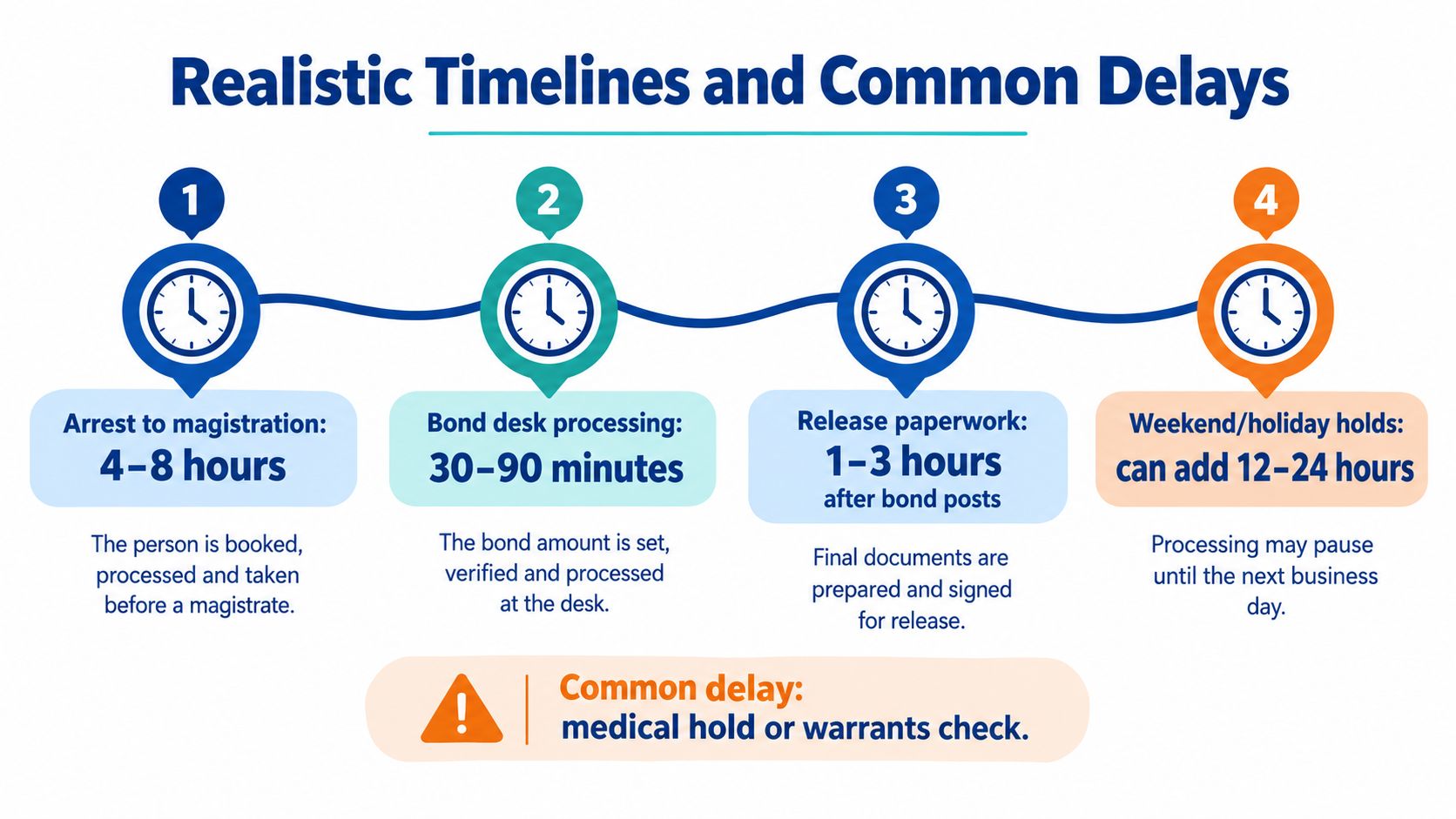
A family may post bond in the morning and still be waiting that evening. Plan for hours, not minutes. The county's guidance describes booking, magistration, bond processing, and release as a sequence that can take several hours. A full day or longer may pass from arrest to release when verification, staffing, or an agency hold slows the process.
Read the timeline in stages
The clock starts at arrest, not when a family member reaches the Bond Desk. Officers first deliver the person to the jail, then staff complete booking and identification. A magistrate must review the charge and set or confirm bond before the Bond Desk can process it.
Once bond is posted, release processing begins. Jail staff review the filing, match it to the custody record, and check whether another agency wants custody. A person with an outside warrant, probation matter, parole issue, or other agency hold may be transferred instead of released from Tarrant County custody.
Delays that deserve a careful question
Some waits reflect the release queue. Others mean the person is not cleared to leave.
- Booking or magistration is incomplete: The Bond Desk cannot process a bond that has not been set or entered into the system.
- Paperwork needs verification: Staff may need to compare the bond filing with the booking record before updating the custody status.
- Another agency has a hold: Tarrant County may keep the person temporarily or transfer them to the requesting agency.
- Information is incomplete: A name, booking detail, or bond amount that does not match can send the filing back for correction.
- The facility is handling a heavy workload: The queue may continue after the financial portion of the bond is complete.
Ask for the specific stage, not a general estimate. If staff say the release is undergoing routine processing, keep checking the inmate record or calling the county's inmate information line. If the bond cannot be confirmed, ask whether the filing is incomplete, still under review, or blocked by an agency hold.
A jail employee can explain the custody status but cannot give individualized defense advice. If the delay involves a new charge, warrant, protective order, probation, parole, or another legal restriction, contact a criminal defense attorney. The attorney can address the legal barrier while the family continues tracking the jail's processing status.
Mistakes That Can Derail a Release
Most avoidable problems begin with incomplete information. Families are tired, worried, and often working from a short phone call. Slow down long enough to confirm the person's identity, the bond amount, and the existence of other holds.
Payment and paperwork errors
Don't arrive with a plan based on an old online post. County payment procedures can change, and a method that worked for someone else may not fit the current bond or facility process. Confirm the requirements before bringing money or signing a contract.
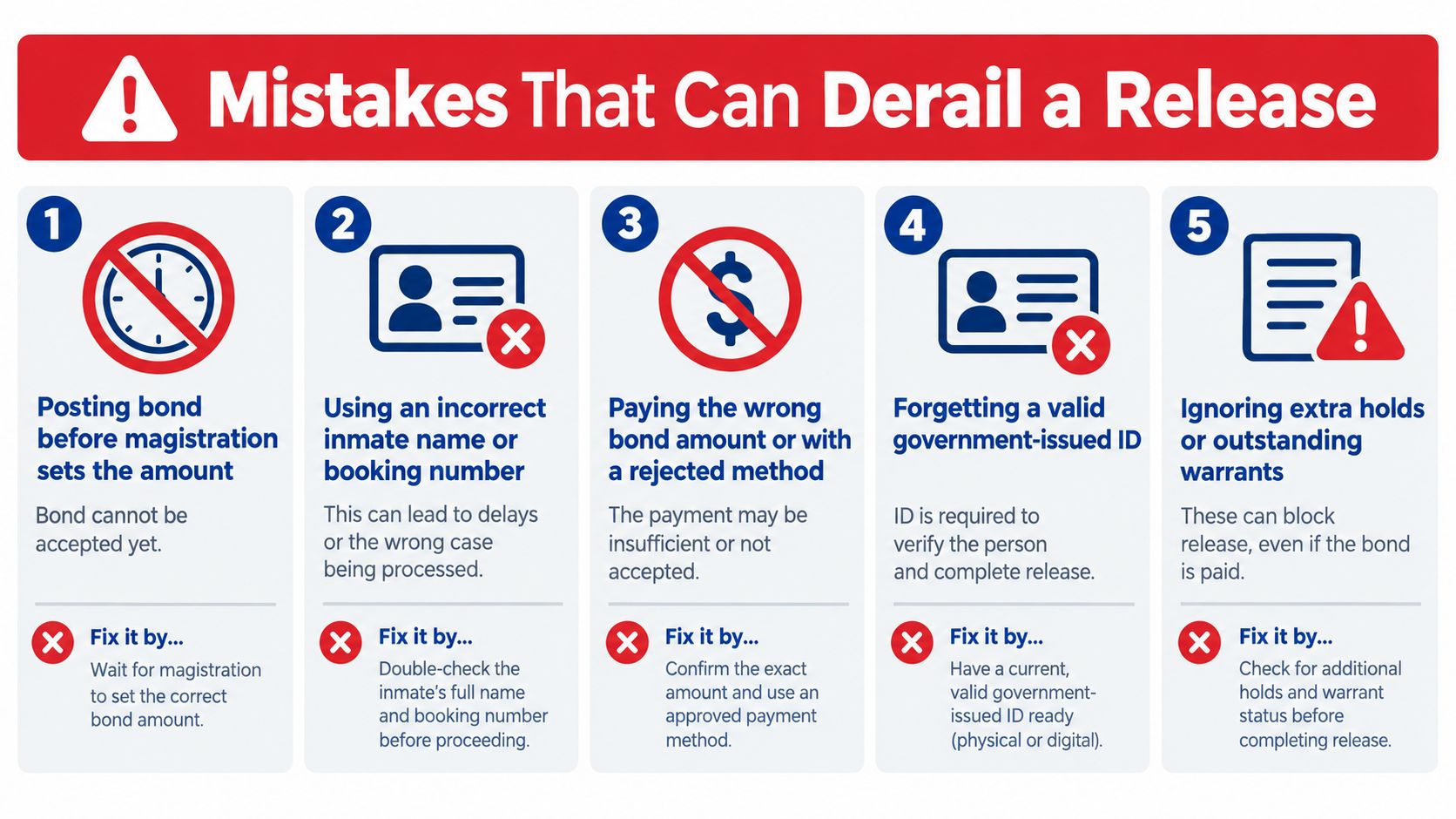
Watch for these mistakes:
- Posting before magistration: If bond hasn't been set, the Bond Desk may have nothing it can accept. Confirm the bond amount first.
- Using the wrong name or booking information: A spelling difference or mistaken booking detail can prevent staff from matching the payment to the correct custody record.
- Bringing an unverified payment method: Ask the county whether your proposed form of payment is accepted and whether additional charges or restrictions apply.
- Failing to bring identification: Take valid identification and keep every receipt or document you receive.
- Ignoring another hold: A person may remain in custody or be transferred to another agency even after the Tarrant County bond is posted.
A family should also avoid promising the person a release time. The county's inmate information guidance explains that staff verify bond paperwork and check for other agency holds before release. That verification step is why payment doesn't equal immediate freedom.
Protect the case while waiting
Jail phone calls may be recorded or monitored. The person in custody should avoid discussing the facts of the case, potential witnesses, or defense strategy over the phone. The family should also avoid using calls to pressure, threaten, or coach anyone involved.
Release planning has a practical side, too. Arrange a lawful, reliable pickup and make sure the person knows where to go after release. If the case involves family violence or a protective order, don't assume that release permits contact with the alleged victim. Read the conditions carefully and review bond conditions in a Texas family violence case with counsel when the situation calls for it.
What Comes Next After Release and When to Call a Lawyer
Release is the beginning of the defense process, not the end of the problem. The written release paperwork may identify the next court date, reporting requirements, no-contact restrictions, travel limitations, or other conditions. The person released should keep those documents in a safe place and follow them exactly.
Treat every condition as enforceable
A person can be released from the county jail and still face serious consequences for violating a condition. Don't contact someone covered by a no-contact order, even if that person wants to talk. Don't assume a family member can deliver a message safely. Ask an attorney before taking action that could affect the case or a related family-law matter.
Court dates deserve the same attention. Put every date and reporting obligation on a shared calendar, arrange transportation, and confirm where the person must appear. Missing court can create a new custody problem and may damage the release arrangement.
When legal help is worth seeking immediately
A private criminal defense lawyer can review the accusation, explain the bond conditions, communicate with the prosecution when appropriate, and identify issues that need attention before the first formal appearance. Counsel may also evaluate whether to seek a bond reduction, request a change to a condition, pursue a personal bond, or investigate whether early case action is appropriate. None of those steps guarantees a particular result.
A court-appointed lawyer may be available for someone who qualifies financially and faces a charge carrying the applicable right to appointed counsel. Families should ask the court or jail about the appointment process, while recognizing that the timing and scope of representation depend on the case and legal requirements.
Call a lawyer promptly if:
- The bond is unusually burdensome: The person cannot pay and needs advice about lawful release options.
- A hold blocks release: Another agency, probation authority, parole authority, or jurisdiction appears to be requesting custody.
- The case involves family violence: Protective orders, no-contact provisions, and family-court consequences can overlap.
- The person is being pressured to discuss facts: Legal advice is safer than explaining the case on a recorded jail call.
- The release paperwork is unclear: Conditions that seem minor can control where the person goes and whom they contact.
- A court date is missing or conflicts with another obligation: Confirm the information before assuming the date is flexible.
The most useful first call is organized. Have the full name, booking information, alleged charge if known, bond amount, release paperwork, and any information about holds or protective orders available. A lawyer can give better general guidance when the facts and documents are complete.
The Law Office of Bryan Fagan PLLC offers guidance on Tarrant County arrest-related matters, bond hearings, and the legal issues that can follow release. If your family needs help understanding bond conditions or deciding what to do before the first court date, visit Law Office of Bryan Fagan PLLC to learn about the next step and request a consultation.
